Retro Fruit Clipart Icons: A Designer’s Embroidery Review
As a designer who spends half my life staring at stitch charts and the other half trying to convince clients that embroidery has more soul than screen printing, I am always on the hunt for digital assets that translate well into thread. We have all been there: you find a cute vector or clipart set online, download it with high hopes, and then realize halfway through digitizing that the details are going to disappear in a sea of satin stitches. That is why I decided to put Retro Fruit Clipart Icons through its paces. This isn’t just about looking at a pretty picture; it is about evaluating whether this design can survive the rigors of real-world production, hold up on a customer’s washing machine cycle, and actually sell in a crowded marketplace.
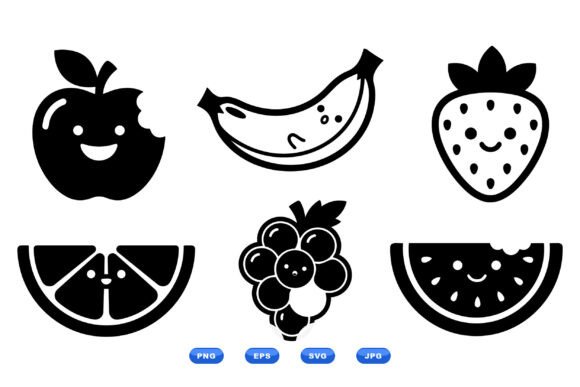
The collection features a flat minimalist icon set displaying smiling fruit silhouettes including apple banana strawberry orange grapes and watermelon. At first glance, the mood is undeniably playful and nostalgic. The "retro" aspect suggests a mid-century modern influence, which is currently having a massive moment in home decor and apparel. But does the simplicity work for embroidery? Surprisingly, yes. In a medium saturated with overly complex, hyper-realistic floral designs, sometimes the clean lines of a minimalist aesthetic cut through the noise. The smiling faces add a touch of whimsy that appeals strongly to parents, gift buyers, and anyone looking to add a bit of personality to their kitchen or wardrobe.
From Screen to Hoop: Real-World Application
To truly judge an embroidery project, we need to imagine it on fabric. Let’s say you are preparing a custom embroidered tote bag for an upcoming craft fair or Etsy listing. You want something that screams "summer vibes" without being cliché. Placing a row of these retro fruit icons along the bottom hem of a canvas tote creates a charming, boutique-level detail. Because the shapes are distinct—recognizable even as small icons—they maintain their visual integrity. A strawberry is clearly a strawberry, not a blob of red thread.
Consider also the potential for sweatshirt embroidery. There is a trend toward "cozy nostalgia," and a chest-sized placement of a single watermelon or apple icon from this set works beautifully on heather grey or cream fleece. It feels like a brand logo for a lifestyle company rather than a cheap novelty item. For baby embroidery, these designs are particularly strong. The soft curves and friendly expressions are perfect for onesies or burp cloths. Parents often look for items that feel safe, cheerful, and timeless, and the minimalist nature of these fruits avoids the cluttered look that can sometimes overwhelm delicate baby fabrics.
Furthermore, these icons lend themselves well to apron embroidery or kitchen towel designs. Imagine a set of three: a lemon, a peach, and a grape cluster, spaced evenly across a linen apron. It elevates a utilitarian item into a piece of home decor. For holiday embroidery, particularly summer holidays or beach-themed parties, these graphics provide instant thematic recognition without needing text. Text adds complexity and potential digitization errors; letting the image speak for itself is often a smarter design choice.
Technical Considerations and Potential Pitfalls
While the aesthetic is strong, no machine embroidery design is perfect out of the box. As a reviewer, I must point out where caution is needed. The primary challenge with any graphic-heavy design is stitch density. If the original vector art relies on thin lines to define the smile or the stem, those details might become muddy if the digitizer does not pay close attention. When converting this to an embroidery file, ensure that the stitch density is appropriate for the fabric. On stretchy knits, a dense fill stitch can cause puckering, so a lighter touch with running stitch outlines might be preferable to preserve the shape of the garment.
Fabric texture plays a huge role here. These flat icons look stunning on smooth cottons, linens, and denim. However, on highly textured fabrics like bouclé or thick terry cloth, the definition will be lost. The background fabric will compete with the design, making the fruit look indistinct. Similarly, when working with dark fabric, you must choose your thread colors carefully. A black outline on a navy shirt might disappear, whereas a crisp white or bright yellow outline will pop. Always test color contrast before committing to a large production run.
Hoop size is another practical constraint. While these icons are scalable, attempting to stitch them in a very small hoop (under 4x4 inches) requires careful placement. If you cram too many icons together, they will merge into a colorful blur. Leave some negative space. Negative space is your friend in embroidery; it gives the eye a place to rest and allows each individual fruit silhouette to be appreciated. Also, be mindful of curved surfaces like caps. Distorting a perfectly round apple onto a curved brim can make it look squashed unless the digitizing accounts for the curvature properly.
Strategic Value for Craft Businesses
For the Etsy seller or small shop product creator, versatility is currency. Retro Fruit Clipart Icons offers high versatility. Because the style is simple, it pairs easily with other elements. You could combine these fruit icons with typography for a "Juicy Summer" quote, or use them as standalone accents on personalized gifts. This adaptability increases the perceived value of your finished product. Customers are willing to pay more for items that look professionally designed and cohesive.
Additionally, these designs are excellent for creating printable mockups. Before you invest time in stitching every variation, you can use the source files to create digital previews for your online store. This helps validate demand without wasting thread and stabilizer. If you are selling digital product sellers or offering design assets, this set provides a solid foundation for customers who may want to create their own variations. The playful nature encourages creativity, leading to higher engagement and social media shares, which is free marketing for your brand.
Final Verdict and Practical Tips
In conclusion, Retro Fruit Clipart Icons is a strong contender for designers looking to add a touch of cheerful minimalism to their repertoire. It balances nostalgia with modern simplicity, making it relevant for a wide audience. However, success depends on execution. Here is my checklist for using this design effectively:
- Test on scrap fabric: Never go straight to the final product. Check how the threads interact with your specific material.
- Review stitch density: Ensure the digitized version isn't too heavy for lightweight fabrics.
- Check licensing: Confirm whether you can use these graphics for commercial projects or if they are restricted to personal use only. This is crucial for avoiding legal issues.
- Use proper stabilizer: A good stabilizer makes the difference between a wobbly mess and a crisp finish.
- Inspect small details: Zoom in on the smiles and stems. Are they clear? Do they need thicker outlines?
If you approach this design with a critical eye and respect for the technical limitations of embroidery, Retro Fruit Clipart Icons can transform from a simple JPEG into a profitable, beautiful handmade product. It fits seamlessly into categories ranging from custom apparel to nursery decor, offering endless possibilities for the creative entrepreneur. Just remember: the best embroidery designs are not just seen; they are felt, worn, and loved.