Retro Design Elements Pack: A Designer’s Embroidery Review
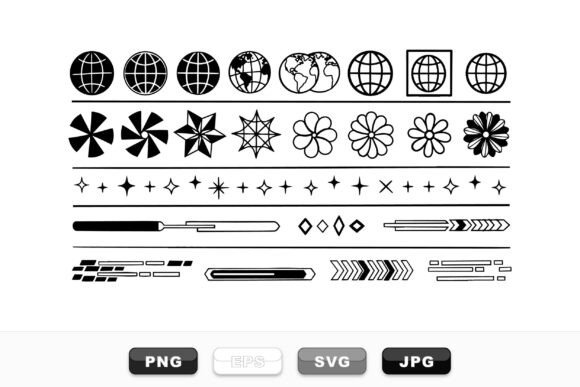
When I scroll through design asset libraries looking for something that feels fresh but timeless, I am usually hunting for balance. Too much detail overwhelms a small hoop; too little detail looks unfinished on a finished garment. Recently, I evaluated the Retro Design Elements Pack, a minimalist vector collection featuring globe icons, geometric stars, floral motifs, diamonds, and arrows in a simple black line art style. While marketed as graphics, my focus here is strictly on its viability as an embroidery file for real-world projects.
This review explores how these clean, graphic shapes translate from screen to fabric, who they suit best, and where they might fail if you are not careful with your stitch settings.
The First Impression: Clean Lines and Graphic Clarity
The immediate appeal of this pack is its restraint. In the world of machine embroidery, "less is more" is often the golden rule, especially when dealing with stitch density. The black line art style of the Retro Design Elements Pack suggests high contrast and sharp edges, which are ideal for translating into satin or running stitches. There is no muddy shading or complex gradient work to confuse the digitizing software or the embroiderer’s eye.
Visually, the collection evokes a mid-century modern aesthetic mixed with contemporary minimalism. The inclusion of globes and arrows suggests travel, exploration, or global connectivity, while the floral motifs and diamonds add a touch of elegance. This versatility makes it a strong candidate for various custom apparel categories. It does not scream "loud vintage"; instead, it whispers "curated boutique."
For designers, this mood is crucial. It allows for brand consistency across different products. Whether you are creating a logo for a coffee shop or a decorative element for a nursery, the visual personality remains professional and uncluttered. This clarity directly impacts customer trust; buyers perceive embroidered items with clean lines as higher quality because the stitching appears precise and intentional.
Real-World Application: From Concept to Finished Product
To truly test a design, you have to imagine it on a physical object. Let’s look at a few scenarios where the Retro Design Elements Pack shines.
Custom Tote Bags and Market Accessories
A common request for small business owners is custom tote bag design elements. The globe and arrow motifs from this pack are perfect for this. Imagine a sturdy canvas tote with a single, well-placed geometric star or a small floral motif near the zipper. Because the designs are minimalist, they do not compete with the text or other branding on the bag. They act as subtle accents that elevate the product from a plain utility item to a handmade product with character.
Sweatshirt Embroidery and Streetwear
For those specializing in sweatshirt embroidery, the diamond and geometric patterns offer a great way to add texture without bulk. Placing a row of small diamonds along the hem or cuff can create a striking border effect. The simplicity of the line art ensures that even on thick cotton fleece, the stitches lay flat and remain legible. This is particularly effective for personalized gifts where the recipient appreciates understated style over flashy logos.
Baby Embroidery and Nursery Decor
Softness and safety are paramount in baby embroidery. The floral motifs in this pack are gentle and non-threatening, making them suitable for onesies, burp cloths, and crib sheets. However, caution is needed with size. When scaling these designs down for baby items, the fine lines must be checked for potential tangling. If the lines are too thin relative to the fabric weave, they may disappear into the material. But when sized correctly, these designs create a sophisticated, modern nursery aesthetic that appeals to parents looking for alternatives to traditional cartoon characters.
Embroidered Patches and Branding
The globe icon is a standout piece for creating embroidered patch assets. Logos for travel agencies, outdoor brands, or educational institutions benefit from the clear symbolism of a globe. The clean borders allow for easy application of a merrow edge (the stitched border around patches), ensuring durability. For commercial embroidery clients, this means a product that holds up to frequent washing and wear, which is essential for maintaining brand consistency.
Where to Exercise Caution
No design is universally perfect. The Retro Design Elements Pack has specific limitations that every designer must respect to avoid costly mistakes.
- Small Hoop Sizes: While the designs are simple, some elements like intricate floral centers or dense geometric clusters may become indistinguishable if stitched in a very small hoop (under 4x4 inches). Always preview the design at its intended final size before committing to production.
- Textured and Stretchy Fabrics: On fabrics like terry cloth, velvet, or loose-knit jerseys, the fine lines of the line art can get lost or distorted. The stabilizer choice becomes critical here. Without proper backing, the fabric may pucker, ruining the clean aesthetic of the vector source.
- Dense Stitch Areas: Although the style is minimalist, converting thin lines to wide satin stitches can increase stitch density significantly. This can make the fabric stiff and uncomfortable, particularly on custom apparel worn close to the skin, such as collars or cuffs.
- Dark Fabric Contrast: The original vectors are black line art. On dark fabrics, this requires a white or light-colored thread outline or fill. Ensure your thread colors provide enough contrast. If the line is too thin, it may vanish against a dark background, defeating the purpose of the design.
Practical Designer Notes for Success
Before you load the digital embroidery file into your machine, follow these steps to ensure a professional result.
- Test on Scrap Fabric: Never assume a design will work perfectly on your final fabric. Test the Retro Design Elements Pack on a scrap piece of the same material to check for puckering, thread breakage, or tension issues.
- Review Stitch Density: Check the digitization settings. Are the satin stitches too wide? Is the running stitch too sparse? Adjusting these parameters can save hours of rework.
- Inspect Small Details: Zoom in on the digital preview. Can the tiny dots of the stars or the intersections of the arrows stitch cleanly? If not, consider simplifying the design or increasing the scale.
- Use Proper Stabilizer: The right stabilizer supports the fabric and prevents distortion. For lightweight fabrics, use a cut-away stabilizer. For stable woven fabrics, a tear-away may suffice.
- Confirm Licensing: If you plan to sell the finished items, verify the license terms of the Retro Design Elements Pack. Some graphic assets restrict commercial use of the final embroidered product. Clear licensing protects your craft business from legal issues.
Final Verdict
The Retro Design Elements Pack is a versatile tool for any designer looking to add a touch of modern retro flair to their work. Its strength lies in its simplicity and adaptability. It works beautifully for Etsy sellers seeking unique listings, small shop products that need a cohesive look, and printable mockups that showcase high-quality craftsmanship.
It is not a magic bullet for every project—complex textures and extreme miniatures require careful handling—but for standard embroidery projects on stable fabrics, it delivers excellent results. By respecting the limits of stitch density and fabric type, you can transform these clean vector lines into tangible, valuable goods that customers love.
For anyone in the graphics or crafts industry looking to expand into textile design, this pack offers a low-risk, high-reward starting point. It bridges the gap between digital precision and handmade warmth, proving that sometimes, the simplest lines tell the strongest stories.