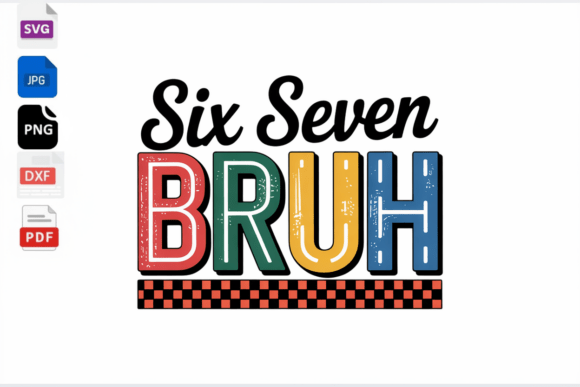
Six Seven Bruh Retro Vintage Style Embroidery Review
As a designer who spends half my life staring at stitch charts and the other half trying to convince clients that "handmade" justifies a premium price tag, I approach every new digital asset with a healthy dose of skepticism. We have all seen designs that look perfect on a screen but turn into a tangled mess of thread once they hit the hoop. Today, I am putting Six Seven Bruh Retro Vintage Style through its paces. This is not just about whether it cuts cleanly in SVG or EPS; it is about how it translates when you are actually stitching this into a finished product for a real human being.
The market is saturated with generic typography and overused motifs. What we need are designs with personality—assets that can anchor a brand identity or elevate a simple tote bag into a statement piece. Six Seven Bruh Retro Vintage Style arrives with a distinct visual voice. My first impression was one of nostalgic confidence. The retro aesthetic is handled with enough subtlety to feel timeless rather than trendy, which is crucial for anyone looking to build long-term brand equity in the handmade space. It feels like a design meant to be worn, displayed, and cherished, not just used and discarded.
Visual Personality and Design Integrity
When evaluating any machine embroidery design, the layout and balance are the first things I scrutinize. Six Seven Bruh Retro Vintage Style possesses a strong central focus that draws the eye immediately. The lettering and accompanying graphic elements are balanced in a way that suggests careful planning. For an Etsy seller or a small shop product creator, this kind of clarity is gold. Customers scroll quickly; they need to understand the vibe of the item in less than a second. This design delivers that instantly.
The vintage style lends itself naturally to specific fabric textures. When I imagine this stitched onto a heavyweight cotton canvas or a soft, heathered fleece, the contrast between the thread and the material creates a tactile depth that flat graphics simply cannot achieve. It bridges the gap between digital precision and analog warmth. Whether you are creating custom apparel or embroidered patches, the design holds its own without looking cluttered or overly busy. It respects the limitations of the medium while maximizing its potential for visual impact.
Real-World Application: From Screen to Stitch
Let’s talk about the practical side. I recently had a scenario where a client needed a unique, personalized gift for a brother who loved 90s aesthetics. They wanted something durable but stylish. I considered using Six Seven Bruh Retro Vintage Style for a custom sweatshirt project. Here is why it works so well in that context.
First, the stitch density appears robust enough to stand up on thicker fabrics like sweatshirt fleece without sinking in. This is critical for sweatshirt embroidery. If the fill stitches are too sparse, the garment looks cheap. If they are too dense, the fabric warps. Based on the clean lines of the vector source, this design likely strikes that sweet spot. It promises a professional finish that enhances the perceived value of the finished product.
Beyond apparel, this design is incredibly versatile for home goods. Imagine it on a kitchen towel or a pillow cover. The retro theme fits perfectly with current trends in farmhouse and eclectic decor. For a craft business owner, this opens up multiple revenue streams. You are not limited to selling just t-shirts. You can create a cohesive line of personalized gifts that includes aprons, tea towels, and nursery decor. The design’s adaptability makes it a high-value asset for any creative entrepreneur.
Where Caution Is Required
No design is flawless, and as a reviewer, I must highlight where Six Seven Bruh Retro Vintage Style might challenge your workflow. While it is versatile, it demands respect from the operator.
If you plan to use this on curved surfaces like caps or hats, you will need to pay close attention to digitizing techniques. Curved surfaces distort flat designs, and if the lettering has intricate curves, they may stretch unnaturally unless the file is specifically optimized for cap hooping. Similarly, for tiny lettering or extremely fine details within the graphic, you must ensure your machine can handle the resolution. On textured fabrics like bouclé or heavy wool, small details can get lost. In these cases, I recommend simplifying the design or increasing the scale to maintain legibility.
Another area to watch is thin or stretchy fabrics. Without proper stabilization, even a well-designed file can pucker. Always test on scrap fabric first. If you are working with dark fabrics, consider the thread colors carefully. A light-colored design on black fabric requires high contrast to pop, whereas a darker design might disappear. Use printable mockups to simulate these lighting conditions before committing to expensive materials.
Practical Designer Notes for Success
To get the most out of this digital embroidery file, follow these practical steps:
- Test Your Stabilizer: The choice of stabilizer (cut-away vs. tear-away) depends entirely on the fabric. For custom apparel made of knit fabrics, a cut-away stabilizer is usually non-negotiable for durability.
- Check Thread Contrast: Before starting a large run, stitch a sample using your actual thread colors. Sometimes a color that looks vibrant on screen appears muddy in person. Adjusting your thread colors can make a huge difference in the final appeal.
- Review Stitch Types: Look closely at the breakdown. Does the design rely heavily on satin stitch for borders? Ensure your machine can execute smooth satin stitches without skipping. Are there areas of fill stitch that could be converted to running stitch to reduce bulk and save time?
- Black and White Mockups: Convert your design to grayscale to check for balance. If the design looks lopsided or unbalanced in monochrome, it will likely look off in color as well.
- Licensing Check: As a commercial embroidery user, you must confirm the license terms. Some files are for personal use only. If you intend to sell the finished items, ensure you have the right to do so. This protects your craft business from legal issues.
Final Verdict
Six Seven Bruh Retro Vintage Style is more than just a pretty picture; it is a functional tool for designers and makers. It offers a blend of nostalgic charm and modern versatility that fits seamlessly into a wide range of projects. From holiday embroidery gifts to boutique branding, this design has the potential to drive engagement and sales.
It appeals to the maker who values quality and the buyer who appreciates uniqueness. By paying attention to fabric choice, stabilization, and thread selection, you can transform this graphics asset into a stunning handmade product. For those looking to add a touch of retro flair to their portfolio, this is a strong addition. Just remember: the best embroidery happens when technology meets thoughtful craftsmanship. Test, refine, and then let your creativity shine.